At a glance
- Where
- 180 Greenwich Street, Lower Manhattan
- Memorial
- Free, daily 8am to 8pm
- Museum
- 9am to 7pm, Wed to Mon, and most Tuesdays in 2026
- Time needed
- 45 to 90 minutes in the Museum, plus the cruise
- Nearest subway
- E to World Trade Center; 1 to WTC Cortlandt
- Under 10
- The historical exhibition may not be suitable
- Age 6 and under
- Free Museum entry; a ticket is still needed
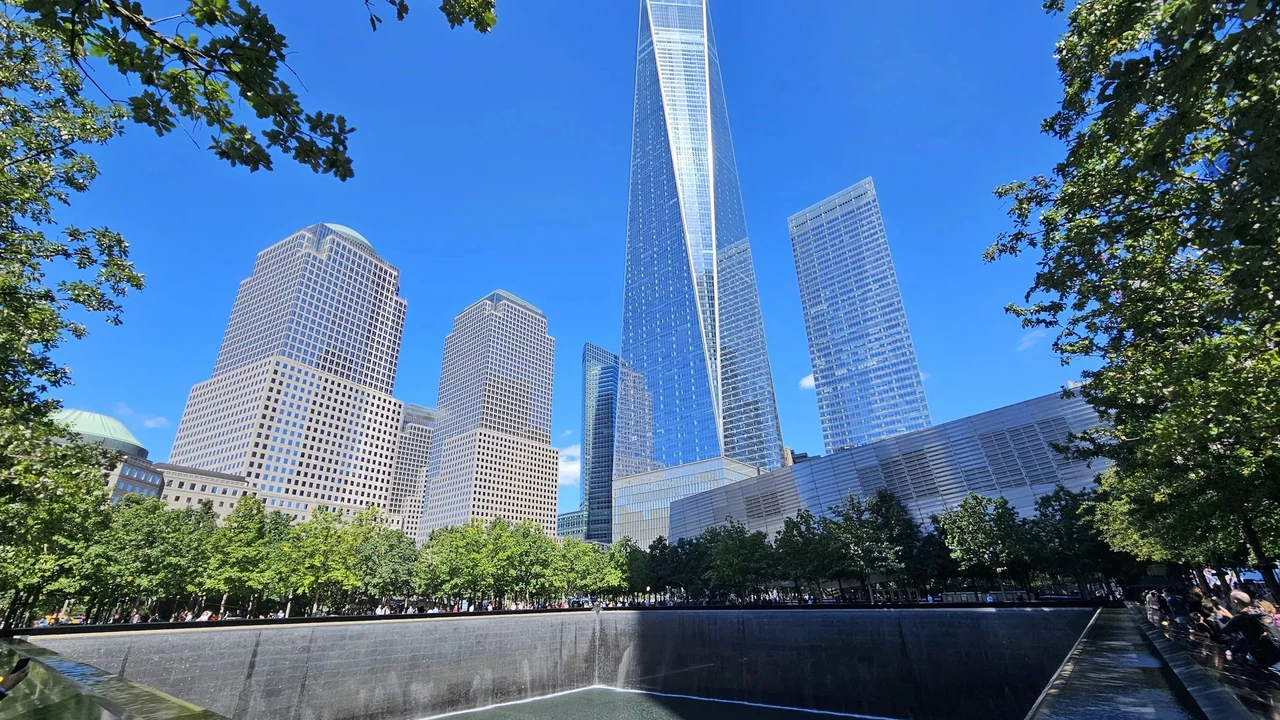
The 9/11 Memorial and Museum are at the World Trade Center in Lower Manhattan, where the Twin Towers stood. The Memorial is two reflecting pools in the towers' footprints, edged with the names of the 2,983 people killed in the attacks of September 11, 2001, and February 26, 1993. The Museum lies below the plaza and tells the story of that day, the years before it and what came after.
This combo pairs Museum entry with a sightseeing cruise past the Statue of Liberty, so you see the statue from the water instead of spending half a day on Liberty Island. Below: what to expect at the Memorial and in the Museum, how long to allow, advice for visiting with children, how a cruise differs from landing, and how to fit both into one day. We checked the details on the 9/11 Memorial & Museum's website on November 24, 2026.
Before you go: winter 2026-27
- Open on Tuesdays in December. The Museum's regular days are Wednesday to Monday, but its special hours page lists every Tuesday in December 2026 as open.
- No outdoor Memorial tour until March. The 45-minute guided tour of the Memorial runs March to October. A free Memorial audio guide is on the Bloomberg Connects app.
- Holiday hours. Thanksgiving and Christmas hours for 2026 weren't posted when we checked, so look at the Museum's special hours page before those days.
- Dress for the water. Wind is common out on the harbor, so bring a jacket or layers for the cruise.
The 9/11 Memorial: the two pools
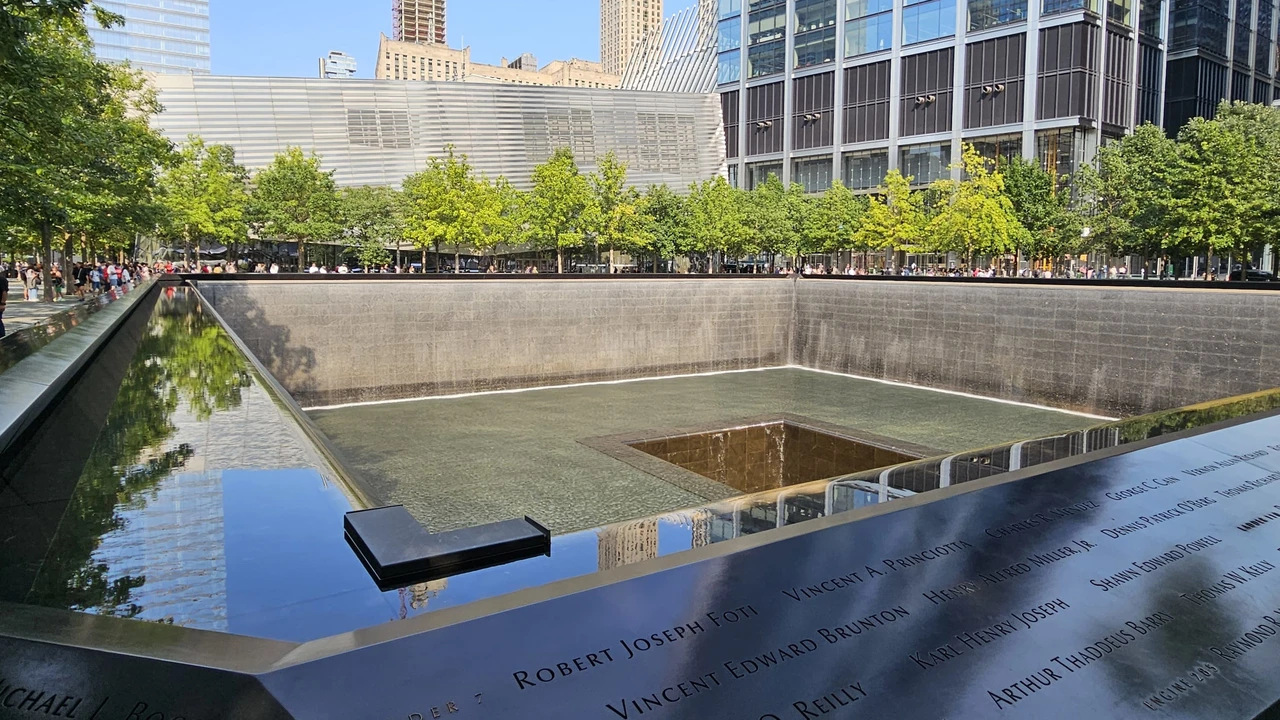
The Memorial, Reflecting Absence, was designed by the architect Michael Arad and the landscape architect Peter Walker, and chosen in January 2004 from 5,201 entries. Its two pools sit in the footprints of the North and South Towers, each nearly an acre. Water falls 30 feet into each square basin, then another 20 feet into a smaller void at the center. They are the largest manmade waterfalls in North America. The Memorial was dedicated on the 10th anniversary of the attacks and opened to visitors on September 12, 2011.
The names are cut into the bronze parapets around the pools: 2,977 people killed on September 11, 2001, in New York, at the Pentagon and in Somerset County, Pennsylvania, and six people killed in the 1993 bombing. Names are grouped by where people were that day and the circumstances of their deaths, and within each group, friends, colleagues, flight crews and first responder units are placed together. Families could ask where their loved one's name would appear, and more than 1,200 of those requests were honored. You can search for a name with the name finder on the Memorial's website.
Among about 400 swamp white oaks on the plaza stands the Survivor Tree, a Callery pear found badly damaged at Ground Zero in October 2001. New York City's parks department nursed it back to health, and it was returned to the site in 2010. In the southwest part of the plaza, the 9/11 Memorial Glade, opened on May 30, 2019, honors people who became sick or died after exposure to toxins following the attacks; its path is lined with six stone monoliths inlaid with World Trade Center steel.
The Memorial is free, needs no ticket and is open every day from 8am to 8pm. It's a place of remembrance. You may leave a tribute on the parapets, but please don't place or throw anything into the pools, or use chalk or markers on the names. Personal photos are fine.
Inside the 9/11 Museum
The Museum opened on May 21, 2014, and its exhibitions are 70 feet below ground. You enter through the Pavilion, designed by Snøhetta, where two 80-foot steel columns known as the Tridents rise inside. A ramp takes you down, with views into what was the original World Trade Center, to the Survivors' Stairs, which gave people a way out on 9/11. The underground spaces, designed by Davis Brody Bond, are built around the original remnants of the World Trade Center.
At the bottom is Foundation Hall, at bedrock. Its back wall is the slurry wall, the concrete retaining wall that stayed intact when the towers collapsed. At its center stands the 36-foot Last Column, covered with inscriptions and mementos; it was the last piece removed from Ground Zero, on May 30, 2002, marking the end of the recovery effort.
- In Memoriam, in the South Tower's footprint: walls of portrait photographs of the 2,983 people who were killed, with touchscreen tables where you can see photos and personal objects and hear remembrances of each person.
- September 11, 2001, in the North Tower's footprint: the historical exhibition, in three parts, Events of the Day, Before 9/11 and After 9/11. It uses artifacts, images, first-person testimony and audio recorded on the day.
- Memorial Hall: Tom Joyce's steel quotation, “No day shall erase you from the memory of time,” and Spencer Finch's installation of 2,983 paper panels.
Photography is for personal use only, and isn't allowed in the historical exhibition, In Memoriam, the auditorium, the Rebirth at Ground Zero film or the South Tower Gallery. Flash is never allowed anywhere in the Museum.
Museum hours, tickets and free Monday evenings
The Museum is open 9am to 7pm, Wednesday to Monday, and on most Tuesdays in 2026, including November 24 and every Tuesday in December. The last entry time on the Museum's visit page is 5:30pm. Entry is timed: tickets are for a set date and time, and can be bought up to six months ahead.
On the Museum's own website, admission was $24 to $36 when we checked. Children 6 and under go free but still need a ticket. With this combo, Museum entry is part of your ticket, so check it for how your entry time works.
Free Admission Mondays. Monday evenings are free, in a window the Museum lists as 5:30pm to 7pm. The free tickets go on the Museum's website at 7am Eastern time that Monday and are first come, first served.
Audio guides cost $11 at the box office or the audio guide desk in the Concourse Lobby, in nine languages including American Sign Language. The Museum's own 60-minute guided tour is in English and meant for adults and teenagers.
How long you need, and visiting with children
The Museum suggests 45 to 90 minutes, at your own pace. Add time for security on the way in, and for the Memorial pools, which stay open until 8pm. If you can, give it the full 90 minutes: the historical exhibition is built on first-person testimony and recordings from the day, and it's better not rushed. From March to October, a 45-minute guided tour of the outdoor Memorial runs daily at 1pm and 2pm; the rest of the year, the free Memorial audio guide on the Bloomberg Connects app lets you walk the pools at your own pace.
The Museum says its historical exhibition, the part about September 11, 2001, itself, may not be appropriate for visitors younger than 10, and asks adults with younger children to use their judgment before going in. The Memorial & Museum's website has guidance for parents on talking to children about 9/11. In summer, a 60-minute Youth and Family Tour gives an age-appropriate guided visit, with every child accompanied by an adult.
With younger children, one approach is to spend more of your time on the plaza and in Foundation Hall, and decide together at the entrance to the historical exhibition whether to go in.
Cruising past the Statue of Liberty vs. landing on Liberty Island
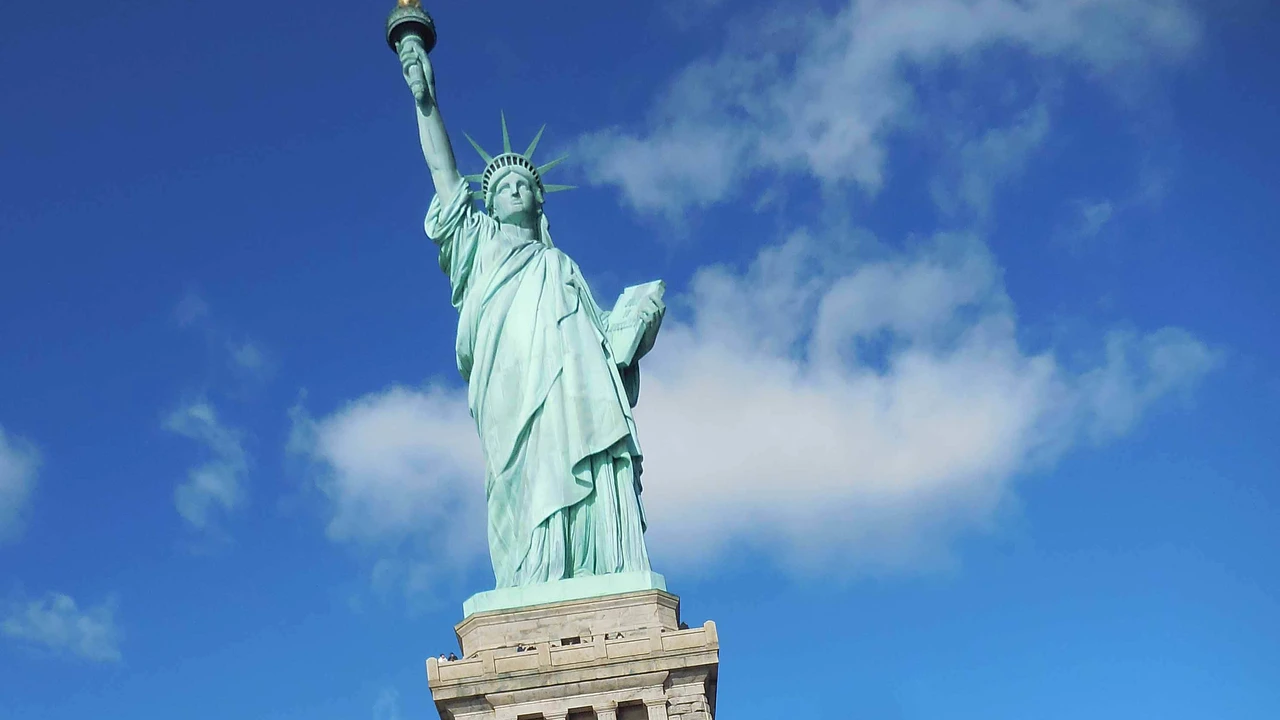
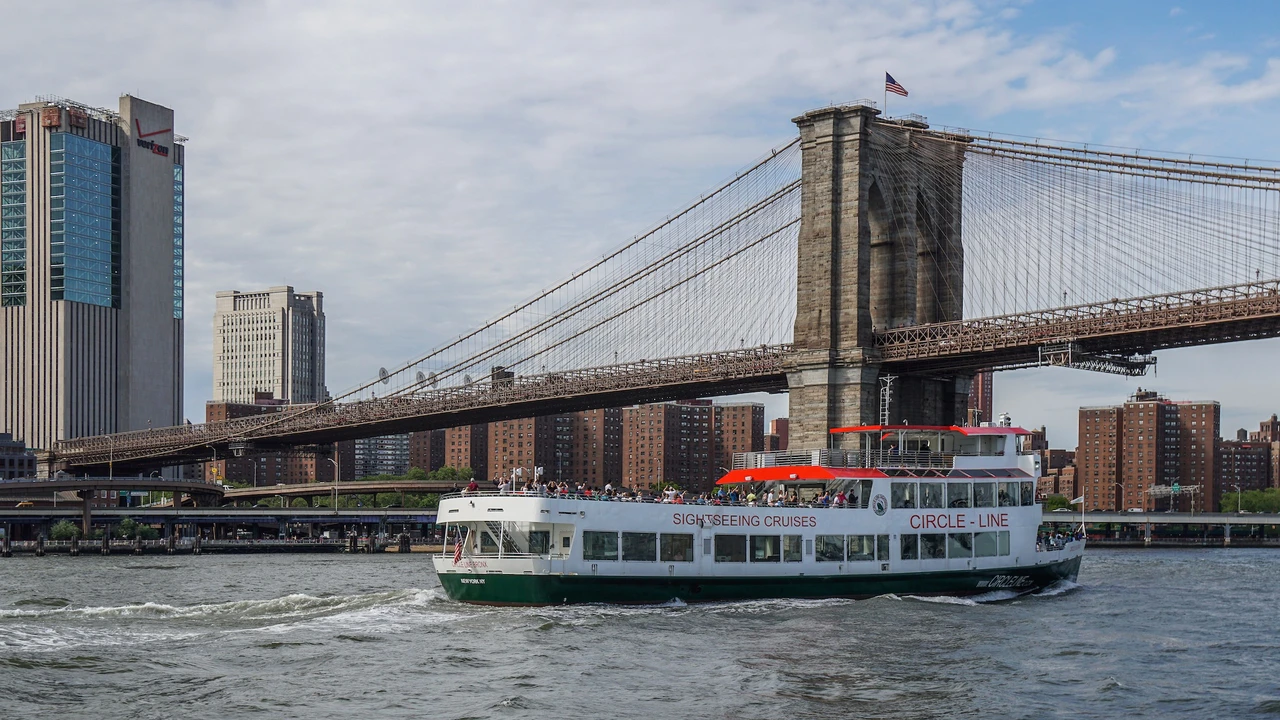
Only one company, Statue City Cruises, is authorized to take visitors onto Liberty Island and Ellis Island. Every other boat, including the sightseeing cruise in this combo, shows you the statue from the water. That changes your day in a few ways:
- Time: Statue City Cruises puts a landing visit at 3 hours or more for one island and 4 hours or more for both, not counting lines. A sightseeing cruise is a set length; check the pier, sailing time and length of yours on the booking card.
- Security: everyone landing on the islands goes through airport-style screening first, and the Park Service says that line can take an hour or more at busy times.
- Going inside: the pedestal and crown are open only to holders of Pedestal Reserve and Crown Reserve tickets, and crown tickets often sell out months ahead.
- What you don't see: on a cruise you don't visit the Statue of Liberty Museum, with the statue's original 1886 torch, or the National Museum of Immigration on Ellis Island.
If you want to stand at the statue's feet or see Ellis Island's Great Hall, read our Statue of Liberty and Ellis Island guide. If the Memorial and Museum are the heart of your day, a cruise fits the statue in without a second half day.
How to fit both into one day
The Memorial opens at 8am and the Museum at 9am, so a morning at the World Trade Center and an afternoon on the water works well. After the Museum, some time in the open air on the harbor can be welcome. A day might look like this:
- From 8am: walk around the two pools before your Museum time.
- 9am to 11am: the Museum. Allow 45 to 90 minutes inside, plus security.
- Midday: lunch in Lower Manhattan, then head to your cruise's pier with time to spare.
- Afternoon: the cruise past the Statue of Liberty. Winter has fewer daylight hours, so an early-afternoon sailing gives you more light on the harbor.
If your cruise is in the morning, turn the day around: the Museum is open until 7pm, with last entry at 5:30pm, and the Memorial stays open until 8pm. On a Tuesday, check the Museum's special hours page first; in 2026 it was open on most Tuesdays, including every Tuesday in December.
Getting there by subway
The Memorial and Museum are at 180 Greenwich Street. These are the nearby stations the Memorial lists:
- World Trade Center: E
- WTC Cortlandt: 1
- Cortlandt St: R, and W on weekdays
- Fulton St: A, C, 2, 3, 4 and 5
- Chambers St: A, C, 1, 2 and 3
- Park Place: 2 and 3
The MTA lists World Trade Center, WTC Cortlandt, Cortlandt St and Fulton St as accessible stations. PATH trains from New Jersey arrive at the World Trade Center. On-street parking nearby is very limited, so come by train if you can.
Security, bags and accessibility
Everyone is screened on the way into the Museum, through metal detectors and X-ray machines; hand-wanding is available instead of the detector. Bring as little as you can.
- Bags: no bigger than 19 by 17 by 8 inches. Large bags, backpacks and large umbrellas go in the coat room on the Concourse Lobby level.
- Food: no outside food or drinks, and no glass bottles. You can eat what you buy at the Museum's café.
- Strollers: any size on the Memorial plaza, but oversize and jogging strollers aren't allowed inside the Museum.
The Museum has a single entrance, and it's accessible. Elevators and escalators connect the underground floors, and manual wheelchairs and walkers are free to borrow, first come, first served. Induction loops work with T-coil hearing aids wherever there's audio, American Sign Language interpretation is free for guided tours with two weeks' notice, and service animals are welcome. Inside, the Museum is kept at 68 to 72°F.
Is this combo right for your day?
It suits a first visit to Lower Manhattan when you have a single day: the Memorial and Museum take a morning, and the cruise shows you the Statue of Liberty and the harbor without the half day a landing needs. Give the Museum the full 90 minutes if you can, and leave a little room in the day afterward.
Choose a landing visit instead if you want to go up into the pedestal or crown, see the original torch, or walk through Ellis Island's Great Hall. With children under 10, read the Museum's age advice above before you book.
Questions people ask
How long do you need at the 9/11 Museum?
The Museum suggests 45 to 90 minutes, at your own pace. Add time for security on the way in, and for the Memorial pools outside, which are open until 8pm. The Museum's visit page gives last entry as 5:30pm.
Is the 9/11 Memorial free?
Yes. The Memorial plaza and its two pools are free and open every day from 8am to 8pm, and you don't need a ticket. Only the Museum, below the plaza, needs a ticket.
Is the 9/11 Museum free on Mondays?
Monday evenings are free, in a window the Museum lists as 5:30pm to 7pm. The free tickets are released on the Museum's website at 7am Eastern time that Monday, first come, first served. Children 6 and under are always free but need a ticket.
Is the 9/11 Museum suitable for children?
The Museum says its historical exhibition may not be appropriate for visitors younger than 10, and asks adults with younger children to use their judgment before going in. In summer it offers a 60-minute Youth and Family Tour, and its website has guidance on talking to children about 9/11.
Does the Statue of Liberty cruise stop at Liberty Island?
No. Only Statue City Cruises takes visitors onto Liberty Island and Ellis Island; a sightseeing cruise shows you the statue from the water. To go into the pedestal or crown, you need a Pedestal Reserve or Crown Reserve ticket from Statue City Cruises.
Can you take photos in the 9/11 Museum?
Yes, for personal use in most areas, but not in the historical exhibition, In Memoriam, the auditorium, the Rebirth at Ground Zero film or the South Tower Gallery. Flash is never allowed. Personal photos are fine on the Memorial plaza.
Is the 9/11 Museum open on Tuesdays?
Its regular days are Wednesday to Monday, 9am to 7pm, but it was open on most Tuesdays in 2026, including every Tuesday in December. Check the Museum's special hours page for your date.
What can you bring into the 9/11 Museum?
Bags up to 19 by 17 by 8 inches. Large bags, backpacks and large umbrellas go in the coat room, and outside food and drinks aren't allowed. Oversize and jogging strollers can't go into the Museum.
Which subway stop is closest to the 9/11 Memorial?
The Memorial lists World Trade Center (E), WTC Cortlandt (1), Cortlandt St (R and W), Fulton St (A, C, 2, 3, 4, 5), Chambers St and Park Place. PATH trains from New Jersey also stop at the World Trade Center.
Sources
- 9/11 Memorial & Museum: Visit the Museum: hours, tickets, free Mondays, time needed, tours, checked Nov 24, 2026
- 9/11 Memorial & Museum: Special and Extended Hours: Tuesday openings, checked Nov 24, 2026
- 9/11 Memorial & Museum: About the Memorial: the pools, names, Survivor Tree and Glade, checked Nov 24, 2026
- 9/11 Memorial & Museum: About the Museum: layout and exhibitions, checked Nov 24, 2026
- 9/11 Memorial & Museum: Visitor Guidelines: security, bags, photography, checked Nov 24, 2026
- National Park Service: Statue of Liberty, Plan Your Visit: the one ferry that lands, security, checked Nov 24, 2026
Bloomtopia is an independent ticket seller and isn’t affiliated with the attractions we write about. Opening hours, tickets and prices can change, so check the attraction’s own website before you go. Prices were correct on the date shown at the top of this guide.